

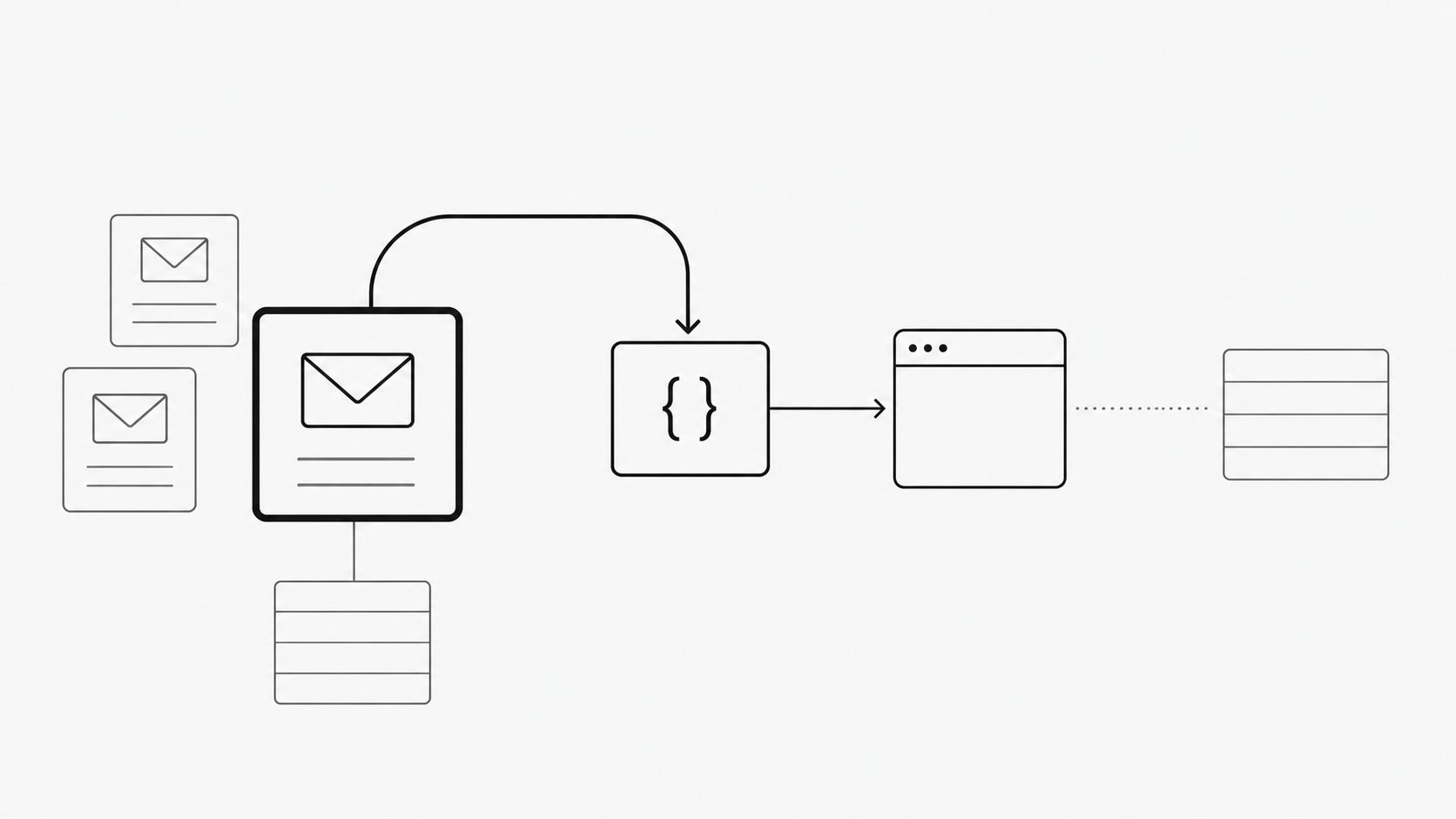
Replay is a core operating capability for email automation, not a support convenience. I assess it by whether operators can restore workflow progress without manually reconstructing the input. Another delivery attempt is only part of that task: the receiver’s existing state and the route’s current settings determine what the attempt changes. Production readiness depends on proving the business result, not merely obtaining a successful webhook response.
This post covers recovery, Stage 4 of the five-stage model in Email Automation Production Readiness. It follows Email Automation Pilot Implementation, which covers running a bounded pilot alongside the existing process. Here, I focus on recovering from failures that surface during and after that pilot.
Selective message replay: keep recovery scoped to the affected event
Key term: Event replay uses stored event data to make another processing or delivery attempt.
At-least-once delivery can produce repeated attempts; Why Retries and Duplicates Break Trust covers that delivery model and its risks.
The recovery question starts when a delivery attempt leaves work unfinished: how does the team recover that work? Identify the affected email, inspect the failed attempt, and establish what needs to change before approving replay. Keep the recovery scope tied to that event and its intended business result.
MailWebhook rebuilds a replay request from the stored message using the associated route’s current pipeline, endpoint, and headers. Those current settings are part of the operator’s recovery decision: a mapping fix can change the payload sent from the saved email. (Webhook retries and replay)
For an email-to-ticket mapping failure, locate the saved email and its failed attempt, confirm the corrected mapping and destination, and approve replay only for the affected event. Then check the resulting ticket against the expected fields. Keep unrelated events outside the recovery scope and save the result for review.
Choosing a different route, using older settings, or previewing without triggering downstream actions requires separate verification. The documented replay behavior leaves those capabilities open.
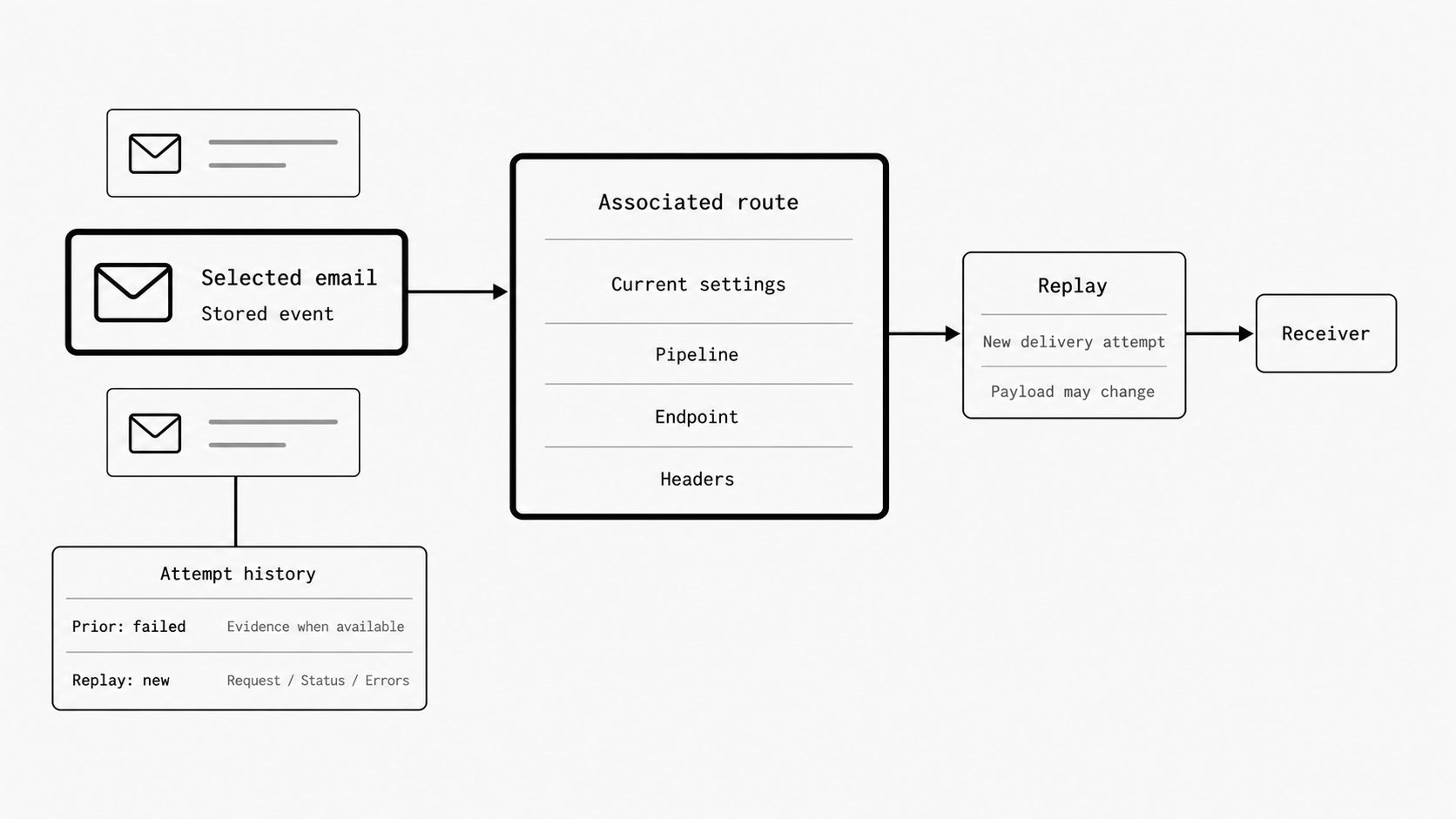
Operational recovery path: connect the fix to verified workflow progress
Key term: Reconciliation repeatedly compares a system's current state with its intended state and takes action to close the gaps.
Recovery is complete only when the affected workflow produces the intended result and the team can verify it.
Stripe’s recovery guidance warns that manual processing can overlap with automatic webhook retries. Its example checks whether an event is already processing or processed. Retries continue for manually processed events until the endpoint acknowledges delivery. Stripe also advises returning a successful response before complex application work finishes. (Manage webhook endpoints)
Use the receiving application’s current state to decide whether another attempt is needed. A named recovery owner checks what work is complete, in progress, or blocked before approving replay. For MailWebhook, verify how replay interacts with pending retries and how the receiver handles simultaneous attempts. Keep those questions open until documentation and tests establish the behavior. (Good Practices - The Kubebuilder Book)
For an email-to-ticket workflow, I require a ticket ID and the expected field values as proof of recovery after a mapping fix. Connect that record to the failed event and its delivery attempt history so another operator can review the result.
Safe replay execution: idempotency and scope as the conditions for recovery
Key term: Idempotency means repeating the same operation has the same effect as performing it once.
Reprocessing confidence depends on controlling duplicate effects when an earlier attempt has an unknown result. I base replay approval on the intended business action.
AWS explains how a lost response can leave a caller unsure whether work succeeded. Its idempotent API design calls for saving the request ID and resulting changes in one all-or-nothing operation. It also rejects changed parameters sent under a reused ID. This example shows why duplicate protection needs an explicit policy for changed requests. (Making retries safe with idempotent APIs)
For an email-to-ticket workflow, define the original action as creating one ticket from one email. Keep that operation’s identity stable across retries. If the ticket already exists with wrong fields, approve an update to that record. Review any fresh operation ID for the risk of creating another ticket. The repair decision must specify what should change in the receiving application.
Require the webhook replay log to show when an earlier result remains unknown. Keep a correction pending until receiver evidence establishes what happened. For a MailWebhook workflow, the receiver’s handling of duplicate IDs and changed payloads remains an open verification question. AWS’s design provides an example of the evidence to seek.
Operational replay capability: replay as infrastructure, not a debug tool
Key term: Recovery testing checks whether a system can restore usable data or service after a failure.
A tested recovery is a condition for putting an email webhook workflow into production.
Google’s SRE book calls for end-to-end recovery tests during normal operations, automated where possible. Its guidance concerns backups and data recovery. The tests cover usable data, available resources, elapsed time, monitoring, and external dependencies. The chapter also treats retention as a constraint on recovery.
I apply that testing principle to release approval. The team must demonstrate recovery with the tools its operators have, within a time the business accepts. Measure that time through to the agreed business result. Keep the evidence current through regular tests and repeat them after changes that affect recovery.
Applied to replay, this also makes the confirmed message-retention period part of release acceptance. If a failure stays hidden longer than the email is kept, replay may no longer be available when the team needs it. That gap calls for earlier detection or another verified way to recover the input.
A replay button establishes a feature; demonstrated recovery establishes an operating capability. Unknown receiver behavior and unconfirmed retention limits remain gaps in the evidence. For platform owners, that distinction makes recovery a basis for production approval rather than a problem left for the next incident.