

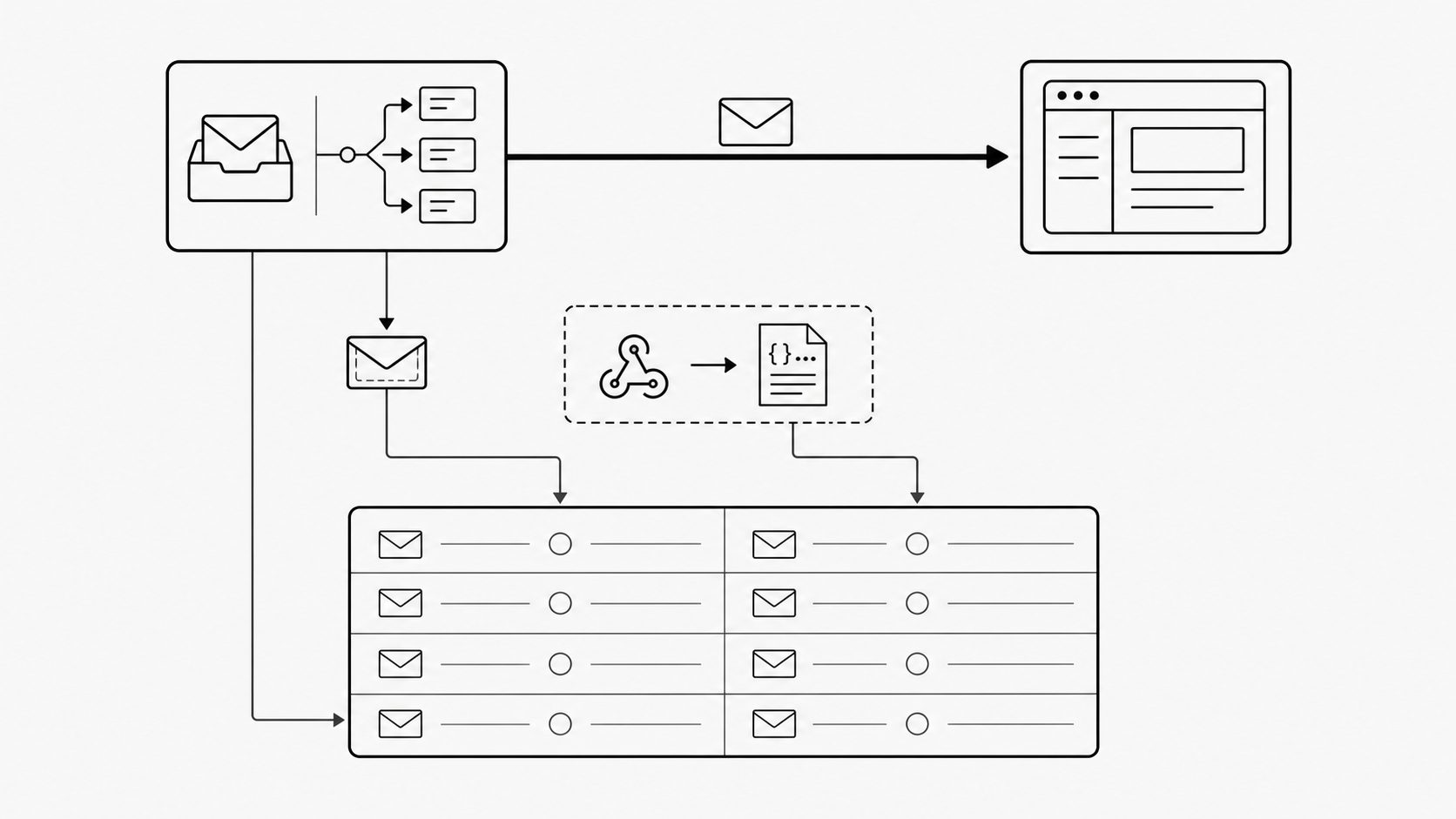
Run your email automation pilot implementation alongside the current process before transferring live work. Focus the first deployment on one email task, with a named owner and a defined review window. The tool is chosen; the next decision is what that task must prove before automation takes responsibility.
This is the first bounded step toward production readiness while the inbox process remains in place. Preserve normal handling while a separate comparison path records proposed outcomes. Verify that separation rather than treating preview or replay as proof that live records stay untouched.
The plan below connects four decisions: what enters the pilot, how results are compared, how the added path stops, and what evidence authorizes a supervised handoff. Start by agreeing on the workflow boundary with the people who handle those messages.
Narrow-Scope First Deployment: Choose One Workflow and Name an Owner
Key term: Deployment scope is the set of work, boundaries, and exceptions included in an initial deployment.
Start your email automation pilot implementation with one clearly defined workflow and one named owner. Give that person authority to approve the boundary, resolve unclear cases, and pause the pilot.
Choose work that staff repeat often, takes real effort, and has an outcome they can check. Ask the team to show recent messages and explain when each task is complete. Choose a task whose rules the owner can explain in plain language. Settle any dispute about the right destination or next step before adding automation.
Weigh the time the task could save against the time needed to check its results. Pass over a task whose normal cases require frequent judgment calls across several teams.
Google’s release guidance describes deploying a change to part of a service for a limited time, then evaluating it. It also calls for representative traffic, a suitable duration, and metrics that help reveal problems. (Canarying Releases)
Apply those release principles to email by defining one task and its review limits before the pilot starts. The deployment scope below is an example of that approach.
Consider a pilot that proposes where to route invoice emails from an approved supplier list. Write its boundary like this:
- Start: A message reaches the agreed intake mailbox and matches the written supplier and document rules.
- Finish: A proposed destination is recorded for review. Keep invoice approval, payment, and supplier record changes outside the task.
- Exceptions: Leave unknown senders, missing invoices, and mixed requests with the current handling team.
- Owner: Record the name of the accounts payable lead who owns the routing rules and pause decision.
Write a short scope note before setup: “[Name] owns [task] for [message group], from [start] through [finish]. [Exceptions] stay with [team]. Review [checks] on [date], within [message limit].” Send it to the owner and the staff who handle those messages. Ask them to confirm the same boundary. Use that agreed note to decide whether each new request belongs in this pilot. Save questions about samples, setup, and review procedures for the next stage.
Parallel-Run Validation: Compare Outcomes While Current Handling Stays in Control
Key term: Parallel testing compares a new process with the current process while the current process remains in control of live work.
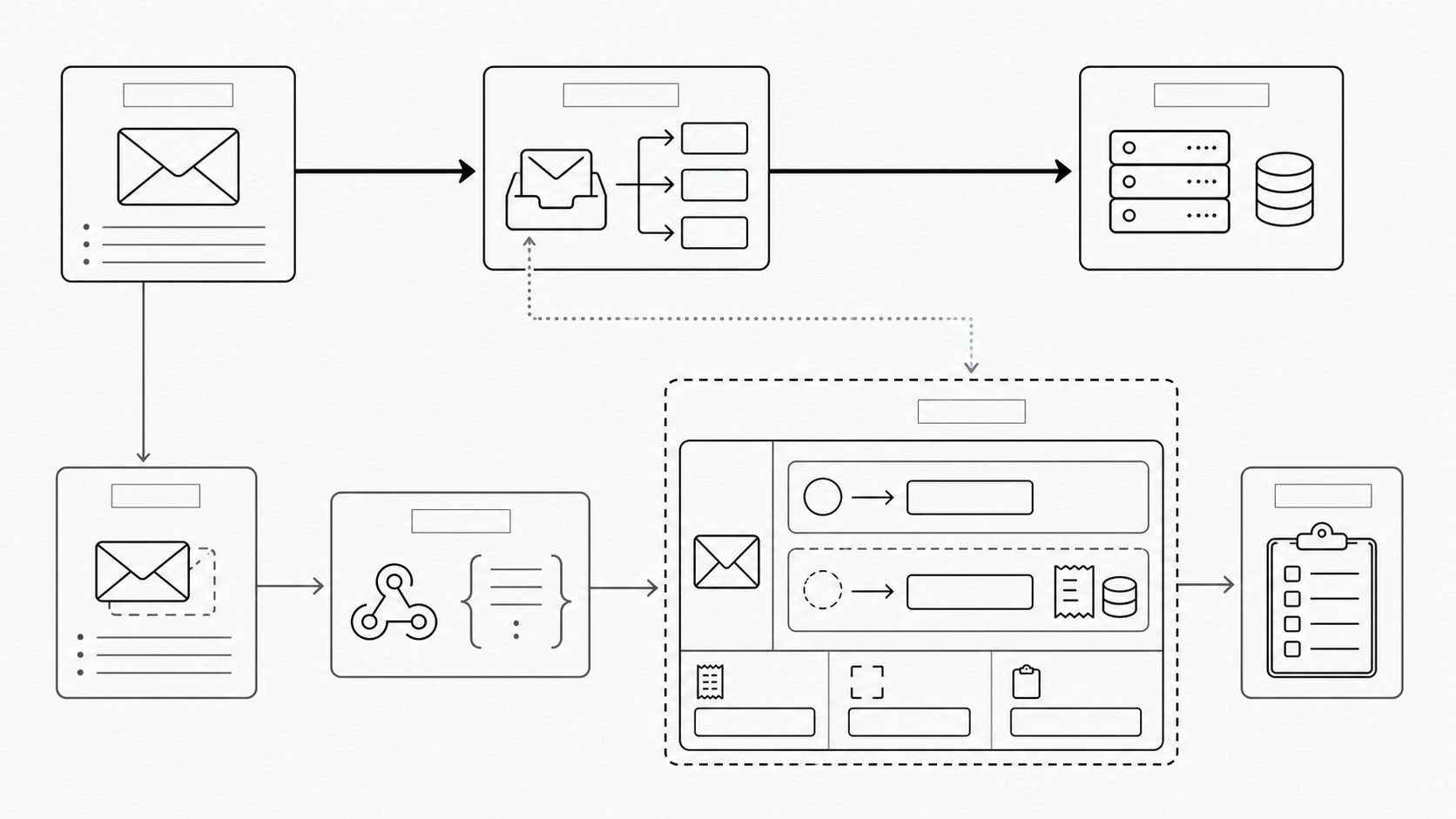
Keep the existing process in control of live work while a separate test path records proposed outcomes. The next stage should define how to compare outcomes, protect live records, and preserve evidence for review. MailWebhook’s overview describes mailbox intake, routing, JSON delivery, Webhook Preview, event inspection, retries, and replay. It calls the project a work in progress, so confirm the behavior and isolation controls in your own setup before relying on them. (MailWebhook Documentation)
For context on using preview and replay to build confidence before go-live, see how teams build confidence before go-live.
Once the owner has approved the scope note and the technical team has documented the separate receiver and access limits, agree on a small review record for each sampled invoice. Keep the current handler’s result and the automation’s proposal side by side: message reference, expected supplier and destination under the written rules, proposed destination, current-process destination, and whether either result needs staff judgment. Avoid copying invoice contents into a comparison record unless the team has a clear need and approved place to store them.
Review each pair against the same written rules. Mark it as a match when both routes agree and the message belongs within scope. If a destination differs, a required detail is missing, or the message falls into an exception, record the mismatch type and a short reason; leave the live invoice with the existing handler. The owner should be able to trace the note back to the sample without relying on memory. Keep the original decision and any correction visible rather than overwriting the first result.
At the review point, the owner checks the sample records, unresolved exceptions, and any changes made to the written rules. They can accept the next bounded step only when the evidence answers the agreed checks and no open mismatch is being treated as a success. If the records are incomplete or a mismatch remains unexplained, pause the pilot, keep normal handling in control, and assign follow-up before collecting more samples. Set the sample boundary and review point with the team in advance; this procedure does not establish a universal pass rate or replace later technical validation.
Disruption Surface Minimization: Limit Changes and Prove the Stop Path
Key term: Change scope is the part of an existing process affected by a new system or procedure.
Before any pilot launch, a later implementation stage must document provider-specific routing behavior, access boundaries, rollback ownership, and a tested way to stop new and queued work while normal mail handling continues. Google Workspace documents routing and delivery options, including routing conflicts and retries; have the mail administrator confirm which details apply to your provider. (Email routing and delivery options for Google Workspace) Record unresolved safety checks as blockers for that stage.
Keep the first boundary narrow in both the message set and the action the automation may propose. For the invoice example, limit the sample to messages covered by the approved supplier and document rules. Unknown senders, missing attachments, mixed requests, and messages that need a judgment call remain with the current team. Do not quietly broaden the supplier list or add invoice approval simply because a nearby task appears convenient. Ask the owner to approve a written scope change before any such case enters the pilot.
Name one person who can call a pause and make that authority visible to everyone handling the mailbox. Before starting, write down what that person should do if a check fails: stop admitting pilot samples, keep or return affected messages to the normal handling path, preserve the comparison notes, and tell the people responsible for follow-up. The exact controls for stopping queued work depend on the chosen mail and automation setup, so the technical team must verify them in that environment. A written stop instruction alone does not prove that a queue or route has actually stopped.
Walk through the stop procedure with the owner and mail administrator before relying on it. Confirm who performs each step, how they know new work is no longer entering the test path, and how staff continue ordinary invoice handling during the pause. Record the observed result and any unresolved gap. If the team cannot establish that the added path is contained and can be stopped without interrupting normal handling, treat that as a launch blocker and keep the existing process in charge until each unresolved control has an owner and supporting evidence.
Success Criteria: Approve a Handoff From Saved Evidence
Key term: Success criteria are the conditions an initial deployment must meet before a supervised handoff.
Approve the live handoff only in a later stage, after comparison, access, stop-path, and retry behavior have been tested against agreed checks. AWS explains that retries can repeat an action and describes using request IDs to make retries safe. (Making retries safe with idempotent APIs) The implementation team should use that guidance to design and verify any receiver that changes business records, then measure staff effort after a supervised handoff. Keep live approval and rollout decisions out of this initial scope exercise.
Record the handoff as an explicit decision after reviewing the pilot evidence. Bring the scope note together with the comparison records, mismatch explanations, exception list, stop-path result, and the names of the people who reviewed them. The owner checks that the evidence covers the agreed sample boundary and checks, while the mail administrator confirms the environment-specific access and stop controls. The team should be able to explain what passed, what remains uncertain, and who will handle cases that stay outside the approved scope.
The owner can approve a supervised next step when the records are complete, differences have an understood disposition, and the required safety checks have evidence. Write down the specific boundary being approved, the supervisor who will watch the handoff, how staff will send exceptions back to normal handling, and who can pause it. If evidence is missing, results conflict with the written rules, or a stop control remains unverified, record the open item and defer the decision. Continue using the existing process for live work until the owner and responsible technical staff have resolved the gap and reviewed the evidence again.
After a supervised handoff is separately authorized, compare actual staff effort and outcomes with the baseline the team agreed to use. Keep that measurement distinct from the earlier parallel comparison: proposed results can show whether routing rules appear suitable, but they do not demonstrate how a live workflow behaves under operational conditions. Use what the supervised stage reveals to decide whether to retain the boundary, revise it, or pause. Any expansion to more suppliers or additional invoice work needs its own explicit scope and review.
Start now by naming the workflow owner and drafting the scope note. Comparison design, access review, stop testing, retry safety, supervised handoff, and effort measurement belong to later implementation stages. Keep everything outside the agreed boundary with the current process until those stages are complete and separately approved.