

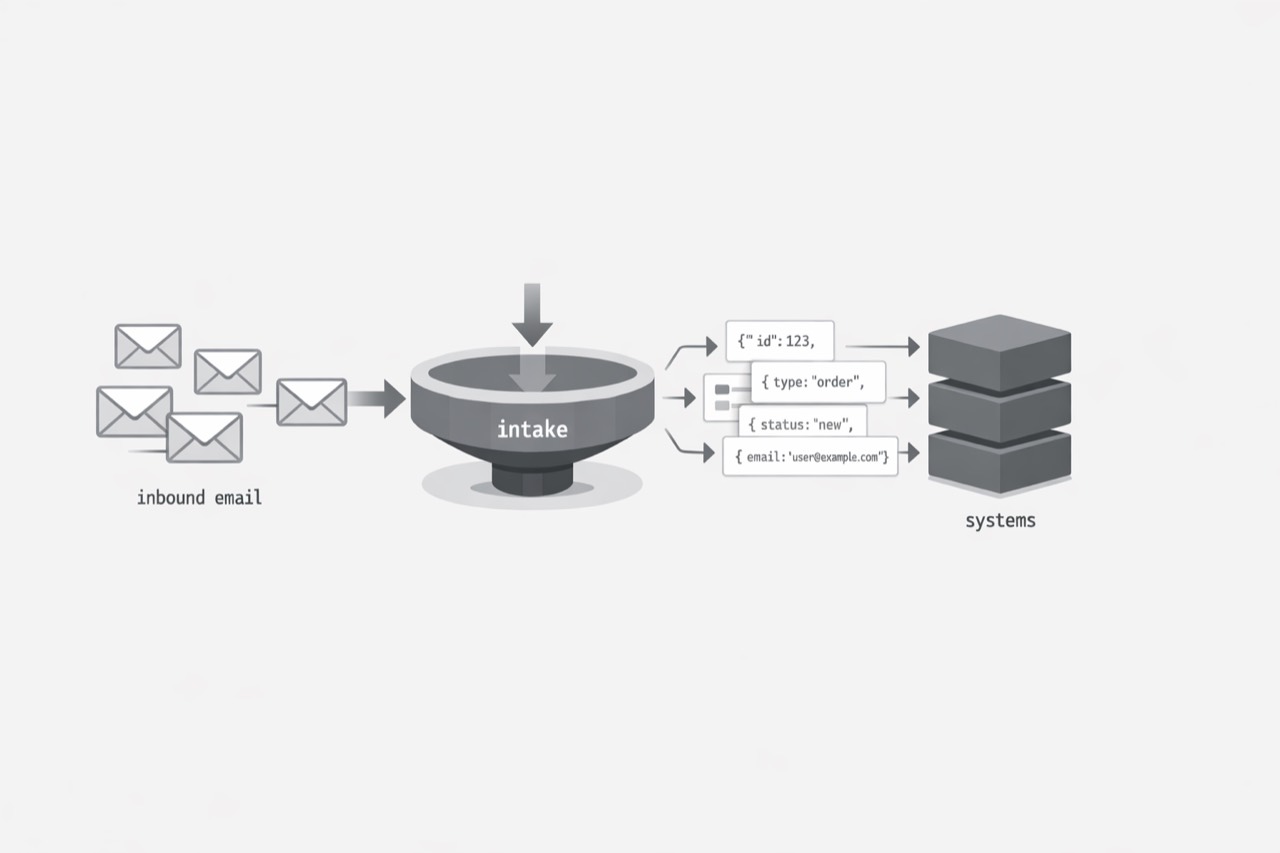
Email is easy to dismiss as legacy infrastructure. Most leadership teams assume the important parts of the business now begin inside modern applications, workflow tools, and dashboards. But when I ask where operational work first appears, the answer is often less modern than the architecture slide suggests.
A surprising amount of real business activity still arrives through inbound email. External parties send requests, updates, confirmations, changes, and supporting documents into mailboxes long before that information becomes a ticket, a record, a task, or a decision inside a system of record. That means email is not just a communication layer. In many organizations, it is still part of the operational backbone.
That is the starting point for this series. I want to show why email remains deeply embedded in critical operations, why that matters for technical executives, and why the risk is not email itself but the fact that these dependencies often remain unmanaged and unseen. If you are evaluating operational bottlenecks, the first step is not to ask whether your company uses email. It is to ask what work still depends on it.
When I map where work really enters the business
When I ask leadership teams where real work first appears, many point to apps or ticket queues. But actual work often arrives first through inbound email, and research describes email use as flow management, triage, task handling, and ongoing work organization rather than simple correspondence. (Microsoft Research - Supporting Email Workflow)
This is the pattern executives should notice first: the inbox often functions as an operational intake layer, even in companies that see themselves as digitally mature. Microsoft Research describes users as managing the flow of arriving messages and triaging new ones, while later work defines email triage as processing unhandled email and deciding what action to take on each item. Enterprise platform materials also continue to position Exchange-based email and calendar as foundational capabilities in modern workplace environments, which supports the idea that email remains embedded in daily operations. (Microsoft Research - Exploring Email Triage: Challenges and Opportunities)
A quick test: ask three managers what important work first shows up in a mailbox before it reaches a system of record. If each names several examples, email is functioning as operational infrastructure, not just a side channel. That conclusion aligns with research on flow management and action-oriented triage, plus enterprise guidance that still treats email as a core service. (Microsoft 365 Enterprise Poster)
So what is email doing under the hood?
Here is the shift I want leaders to make: stop seeing inbound email as a note for a human to read, and start seeing it as a business signal that triggers work. In many companies, the mailbox is already acting like a handoff layer between outside parties and internal systems, whether anyone planned it that way or not. (Mailgun - Inbound Email Routing)
Key term: Email as event transport means an incoming email carries a business event into the company and starts the next action.
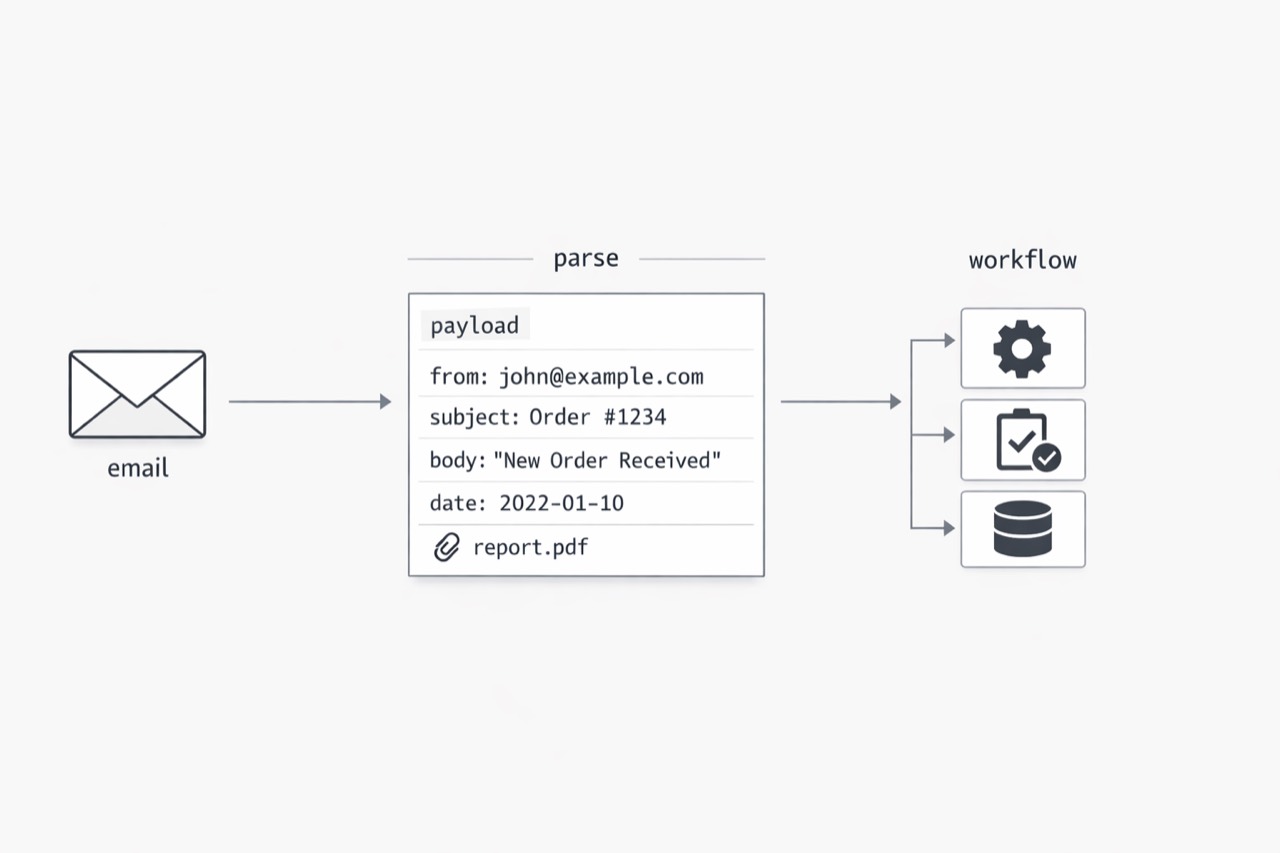
You might be wondering: is that too technical a frame for something as ordinary as email? I do not think so. I think it is the clearest way to describe what is already happening. Modern tooling is built to receive inbound email, parse the message body and attachments, turn the contents into structured fields, and pass that data into downstream workflows. (SendGrid - How We Use Inbound Parse on the Community Development Team)
That matters because the message itself is rarely the end product. The real value sits in the event it represents. A customer sends a change request. A partner sends a status notice. A bank, carrier, marketplace, or outside operator sends an update that needs a response. Once software extracts the sender, subject, body content, metadata, and attached files, the email starts to look less like correspondence and more like a machine-readable trigger for operational work. (Zapier - Email Parsing Automation)
You can see this directly in the tooling. Mailgun documents inbound routing that can parse incoming messages and send the results forward as webhook payloads, including attachments. SendGrid describes inbound parse workflows that convert received messages into structured objects for later processing by applications and teams. Zapier frames email parsing as extracting key details from incoming messages into structured data that other automations can use.
From an executive point of view, this changes the question. The question is no longer, “Do we still rely on email?” The better question is, “Which external business events are entering through email before they become records, tasks, or decisions inside our stack?” Once you ask it that way, a lot of hidden operating reality becomes visible. The inbox is often serving as the first arrival point for important signals, and your teams or tools are translating those signals into the systems that leaders actually monitor.
I have found that this framing helps technical executives talk about email without getting stuck in old debates about user preference. This is an operating model issue. If inbound messages are being parsed, transformed, and forwarded into business processes, then email is participating in process execution. It may be informal in appearance, but the function is very real.
The practical takeaway is simple: when email repeatedly causes work to begin, update, or escalate, it is carrying business events into the organization. That gives you a sharper lens for the rest of this series. Before you modernize anything, map the moments where an inbound message becomes a downstream action. Those are the places where email is doing real system work under the hood, even if nobody has named it yet.
Here is where the executive risk shows up
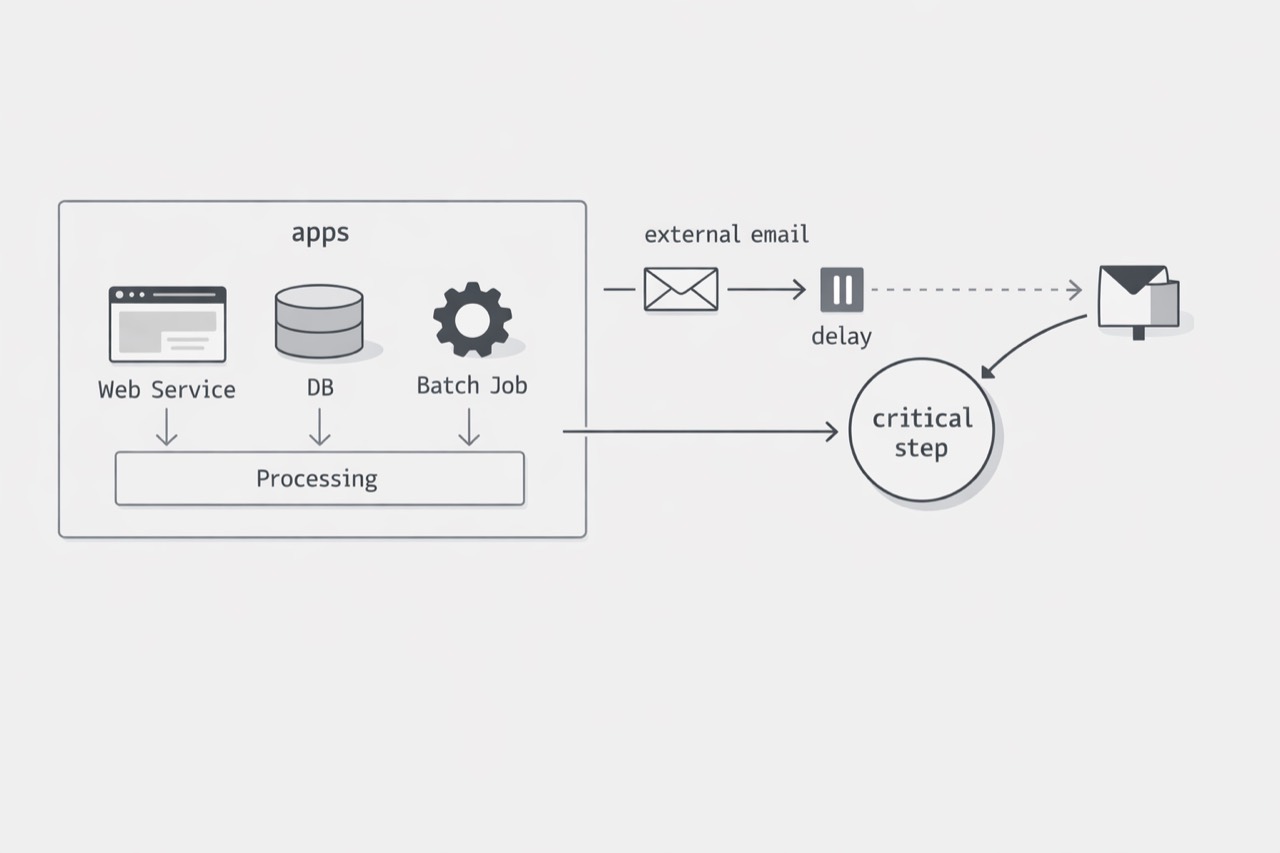
A workflow does not have to appear in an architecture review to be business-critical. In large organizations, email often carries sensitive information and day-to-day operational activity, so a quiet break in an email-dependent path can become a revenue, service, security, or audit problem before leadership sees it. (Forrester TEI - Egress Intelligent Email Security)
Key term: Hidden dependency risk means important business work depends on email paths that leaders have not clearly mapped, managed, or monitored.
This is where the conversation becomes an executive issue. If an inbound message starts work, updates work, or clears the next step in work, then the mailbox is part of operations whether your diagrams show it or not. Once that is true, every weak point around that path matters more than most teams expect. (Microsoft Research - Information Flow in Large Enterprises)
You can group those weak points into four buckets. First, reliability: if a critical message is delayed, quarantined, routed incorrectly, or missed in a crowded mailbox, the business process stalls. Microsoft Research on information flow in large enterprises supports the broader point that email pathways shape how work moves through organizations.
Second, security: Microsoft 365 security guidance highlights spoofing, phishing, and email protection as core concerns in modern enterprise environments. When an email-based step sits inside a critical process, the attack surface extends into the business workflow itself. (Microsoft 365 Security Guidance PDF)
Third, auditability: leaders often assume the system of record tells the full story, but approvals, confirmations, or sensitive context may arrive through email first. Forrester material on enterprise email risk describes business email as carrying sensitive and time-sensitive data at significant scale, which helps explain why unmanaged email-dependent processes create control gaps.
Fourth, accountability: when a dependency is hidden, security, infrastructure, application, and operations teams may each own part of the outcome while no one owns the full path end to end.
The practical takeaway is this: if a business process can fail because an email does not arrive, is not trusted, or is not acted on in time, you are looking at hidden dependency risk. That gives executives a clear next question to ask: where do we depend on email for continuity, control, or evidence even if our architecture documents stay silent on it?
Why modern stacks still stall at the edge
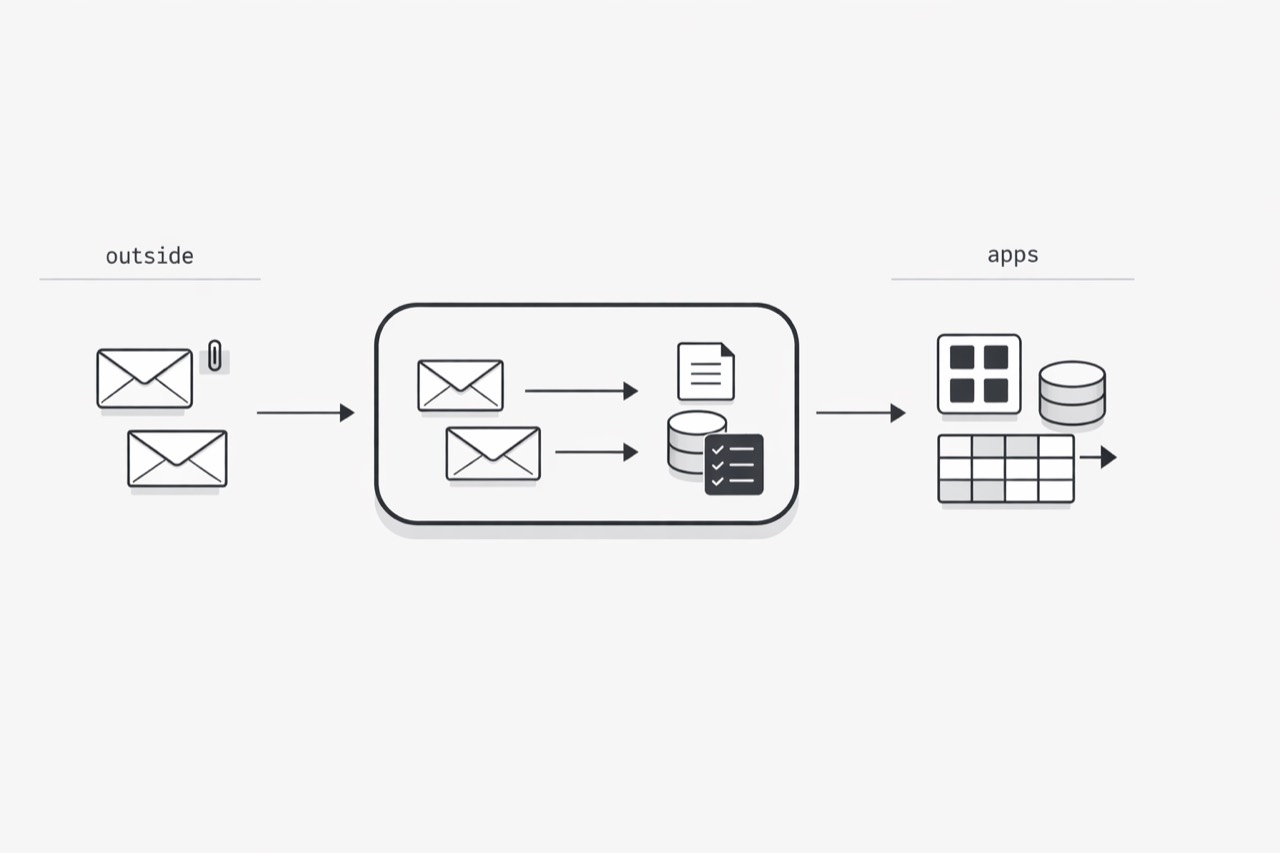
I see this pattern all the time: a company invests in APIs, workflow platforms, and clean internal data models, then hits friction the moment work crosses the company boundary. The inside of the stack is structured. The outside world still sends email. That gap matters because modern email platforms continue to offer inbound parsing and routing features built to turn incoming messages into application inputs, which shows the demand has not disappeared. At the same time, workflow vendors keep making the case that operational work is stronger when requests begin inside a trackable system of record instead of being scattered across inboxes. When I put those two facts together, the problem becomes hard to ignore: many modernization programs have upgraded the core, while the edge where outside work first arrives still depends on email-derived intake. (Mailgun - Inbound Email Routing)
Key term: Modernization gap means your internal systems are modern, but incoming work from outside parties still enters through email before it becomes structured inside your stack.
You might be wondering: if the backend is modern, does this edge really matter that much? I think it does, because the edge sets the quality of everything that follows. If a supplier, partner, customer, or outside operator sends important information by email, your team still has to receive it, identify what it means, capture the right fields, and route it into the right system before the rest of your automation can help. A polished internal architecture does not remove that intake step.
This is why I do not think the practical answer is to declare email obsolete. The practical answer is to control it. Mailgun describes inbound email routing that parses messages and forwards them for downstream handling. SendGrid describes inbound parse usage that converts received email into structured data that applications can process. Those capabilities exist for a reason: organizations still need a bridge between email-shaped input and system-shaped work.
From an executive view, the gap shows up in three places. First, speed. A process that looks automated on the inside can still wait at the boundary for a person or brittle rule to translate an email into a usable record. Second, consistency. If the same kind of incoming request is interpreted differently by different teams, the company creates uneven data and uneven execution before the workflow even starts. Third, trust. Adobe argues for an operational system of record because work is easier to manage when requests start inside a trackable workflow rather than living across email threads. I think that is the real executive lesson here: modernization is incomplete when the first mile of work still relies on manual interpretation inside mailboxes. (Adobe - 10 Reasons You Need an Operational System of Record)
So what does a better move look like? I would add a controlled intake layer that receives inbound email, normalizes the useful data, and routes the resulting work into trusted systems with clear ownership and traceability. That approach fits the reality of how business still arrives while improving the operating discipline around it.
The takeaway I want leaders to keep is simple: the goal is rarely to remove email from the business overnight. The better goal is to stop letting email remain the unmanaged edge of an otherwise modern stack. When you add a controlled layer between inbound email and your systems of record, you reduce friction at the boundary and make the rest of your modernization investment work the way it was meant to. That is the shift from hoping people translate inbox activity correctly to designing a repeatable path from outside message to inside workflow.
The point of this opening essay is not that companies should panic about inboxes or declare modernization a failure. It is simpler than that: you cannot improve what you have not mapped. If important business events still enter through email, then email belongs in the operational conversation alongside APIs, workflow engines, and systems of record.
For technical executives, that recognition changes the agenda. What looks like a minor communications detail is often a source of hidden dependency, inconsistent execution, and control risk at the edge of the business. Once you see inbound email as part of how work actually arrives, you can start designing for it instead of inheriting it by accident.
Teams ready to move from inbox coordination to software-owned intake can start with the core path for software-owned email intake. Operations teams that want the process handled for them can compare that with email data entry automation.
In the rest of this series, I will build from that foundation. We will look more closely at where these email-driven paths create friction, how teams can make them visible, and what a more controlled operating model looks like when the inbox is treated as a real entry point into critical workflows.