

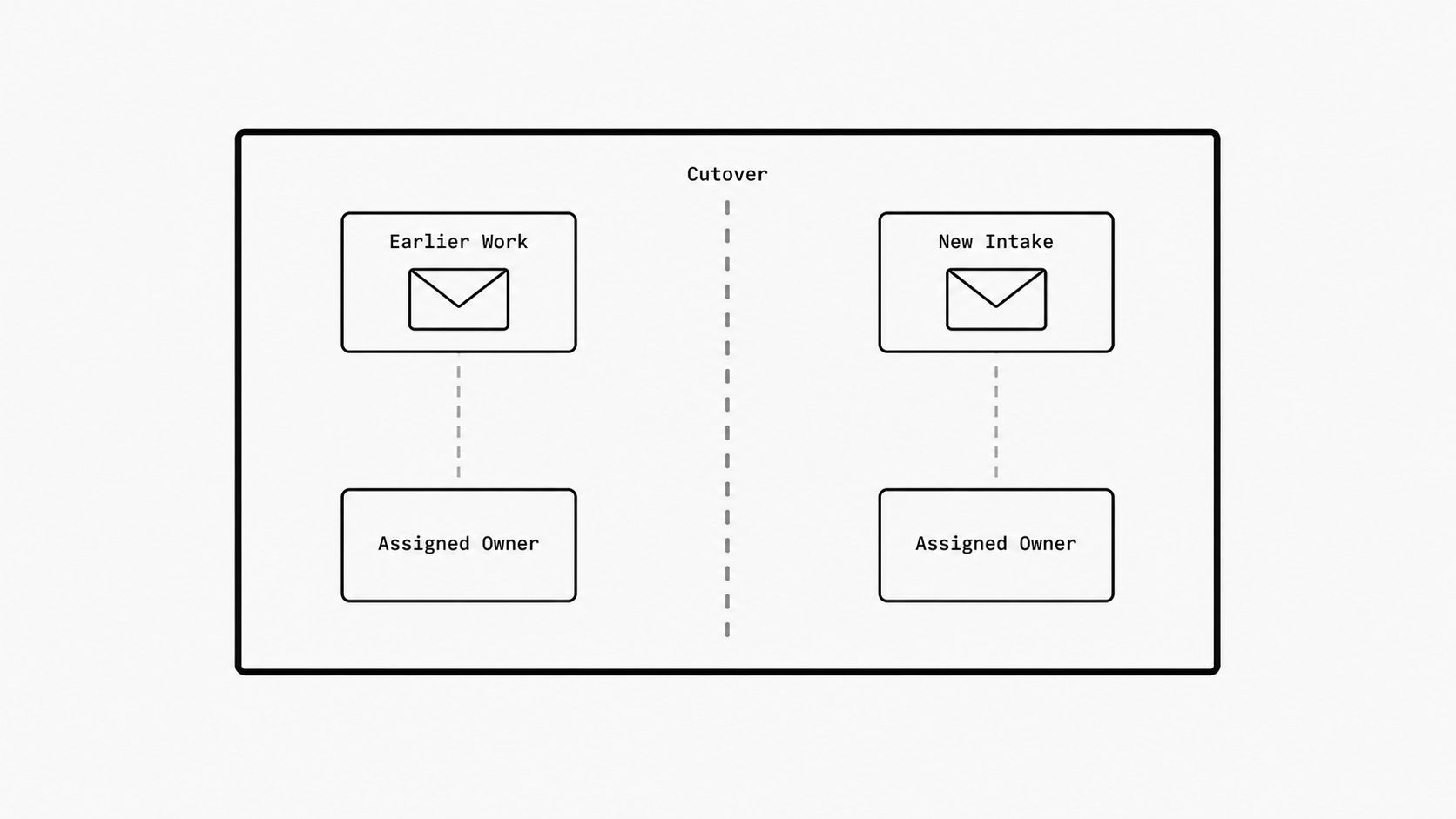
Historical email backfill makes a limited migration trial more useful by including work that predates the cutover. Redirecting new mail does not resolve earlier requests, and importing older messages does not authorize repeating completed actions.
Backfill lets teams evaluate the new workflow with the history it needs. A safe handoff still depends on what the trial demonstrates, reducing uncertainty before a wider commitment.
Historical message backfill: include earlier work in the rollout plan
Key term: Backfill brings emails received before a mailbox was connected into the new workflow.
Historical message backfill belongs in the rollout plan because older emails may still be needed to test the new workflow or complete open work.
MailWebhook documents backfill for IMAP, Gmail, and Microsoft 365. Its documentation describes background jobs that pause when errors occur, with plan limits controlling how far back a mailbox can be backfilled. Treat these as documented capabilities to validate in your own setup. (Mailboxes)
For a move from IMAP to webhook delivery, give earlier messages a defined role. Use approved older support requests to check the receiving app’s output. Disable customer replies and changes to live records in that app during the test. Processing unfinished requests needs separate approval because it authorizes actions on prior work.
The intended history range also needs to fit the service. Confirm the plan’s lookback allowance, charges for processing historical messages, and available date and folder controls before estimating the work. Any required messages outside the confirmed scope remain part of the migration effort.
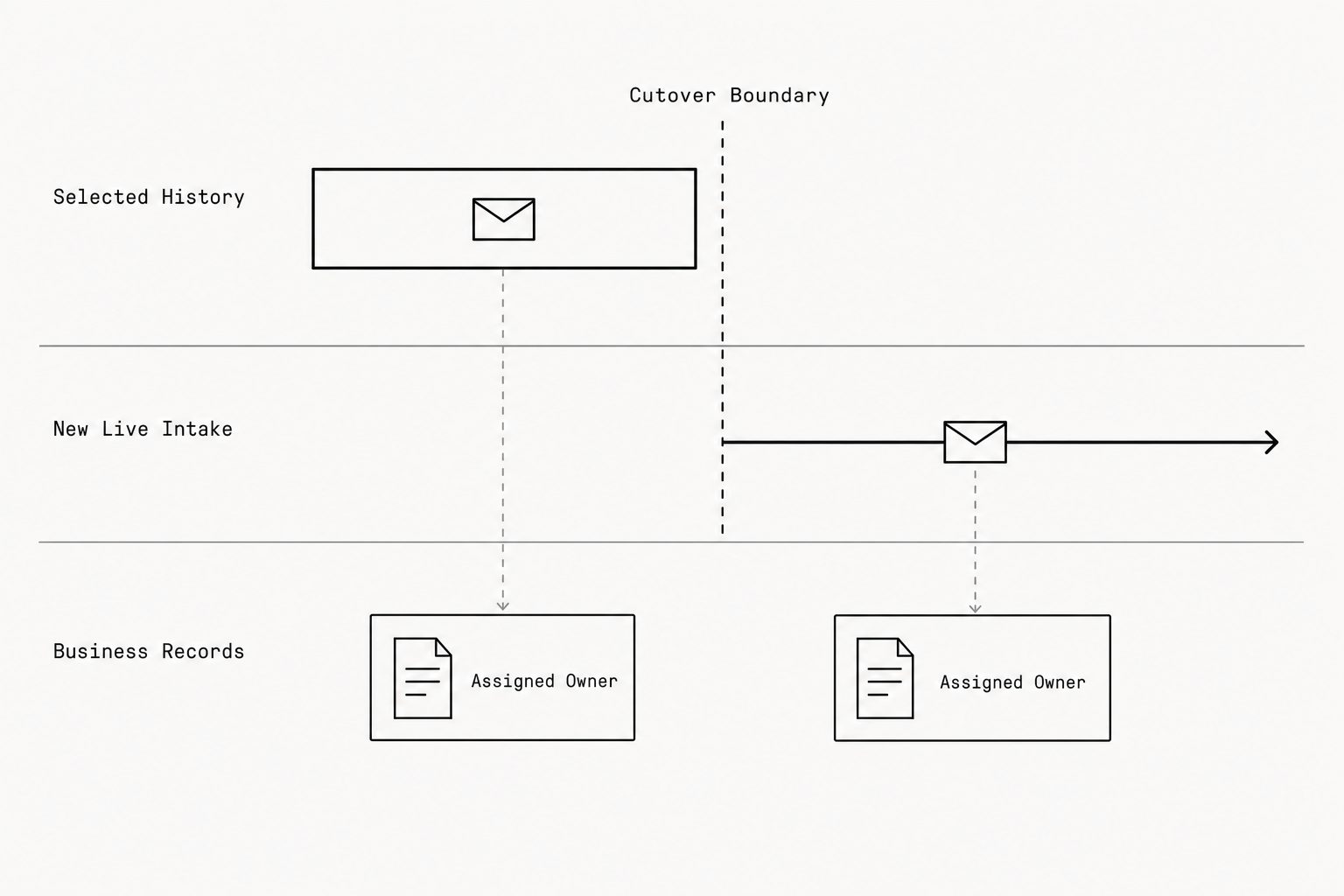
Cutover continuity: give earlier work a clear owner at handoff
Key term: Cutover is the switch that directs live traffic from the old system to the new one.
Cutover continuity depends on giving unfinished work a clear owner when the new email workflow takes over.
For an email workflow, an earlier request may still need a reply after live mail starts reaching the new email webhook receiver. Assign that request to the old process or the new workflow, with a named person accountable for finishing it. The handoff record needs to show who accepts the open work and when responsibility changes.
Gmail illustrates why a saved sync checkpoint needs separate treatment. Full synchronization retrieves messages; partial synchronization reads changes after a saved history ID. If that ID falls outside the available change history, the client must perform a full sync. That range concerns change records. Keep the intended message scope separate from the checkpoint, and confirm access to the older messages it includes. This gives the handoff review a clear account of which earlier messages still need to be covered. (Synchronize clients with Gmail)
For MailWebhook, require a controlled demonstration on the selected provider before accepting the handoff. It needs to show how historical input meets live ingestion, what delivery order the receiver sees, and how processing resumes after an interruption. Those results support the ownership decision only for the conditions tested.
Idempotency During Backfill: Protect Completed Work
Key term: Idempotency means that repeating the same request has the same effect as carrying it out once.
Backfill must protect completed work from repeat actions, including work finished in the old system. See idempotency keys for email webhook retries for receiver-side handling of repeated events.
AWS describes using explicit request IDs to recognize repeats. Its design saves the duplicate-tracking record and the related changes together, so either all succeed or none do. Apply that principle when reviewing how an email webhook receiver protects a business action, such as creating a support ticket. (Making retries safe with idempotent APIs)
For MailWebhook, confirm which identifier marks a message as previously delivered and how long that record is kept. Verify how those rules apply across mailboxes, routes, and repeated backfill runs. The receiving app also needs evidence of work completed in the old system. If an earlier message already has a ticket there, require the receiver to recognize that ticket and prevent a second creation.
Track delivery status and business completion separately. If delivery is recorded while ticket creation fails, the recovery path needs to finish the missing action without repeating work that succeeded. Approval depends on evidence that the workflow handles both completed actions and partial failures.
Phased cutover: make historical backfill easier to approve
Key term: Phased cutover moves selected parts of a workload to a new system in stages, with checks between stages.
Limit the first migration approval to one workflow and an agreed range of older messages. (Cutover stage)
Historical backfill can make that smaller approval useful. Include earlier work in the trial so reviewers can judge the workflow with the history it needs. Keep the remaining inbox under its current process, with wider rollout subject to a separate decision.
For a MailWebhook rollout, confirm whether the receiving app can isolate that workflow without both systems acting on the same work. Approval needs a demonstrated way to stop new actions and a repair plan that accounts for replies already sent or records already changed. Include the cost of running both processes until the next review in the approval request.
Judge the trial by whether it produces enough evidence to expand, fix a gap, or stop. A clear reason to pause is a useful result when it tells the team what must change before taking on more live work.